

Grief in animals – a young research field
Grief is not only for us humans.
Animals also show in many ways that they feel and process the loss of companions.
Grief is a universal expression of love, attachment – and farewell.
Note: This article is based on a previous publication in viaMAG, the magazine for a new culture of mourning.
For a long time, it was thought that animals were pure stimulus responses – incapable of real feelings such as grief, compassion or love.
Observations suggesting such emotions in animals were dismissed as sentimental and unscientific.
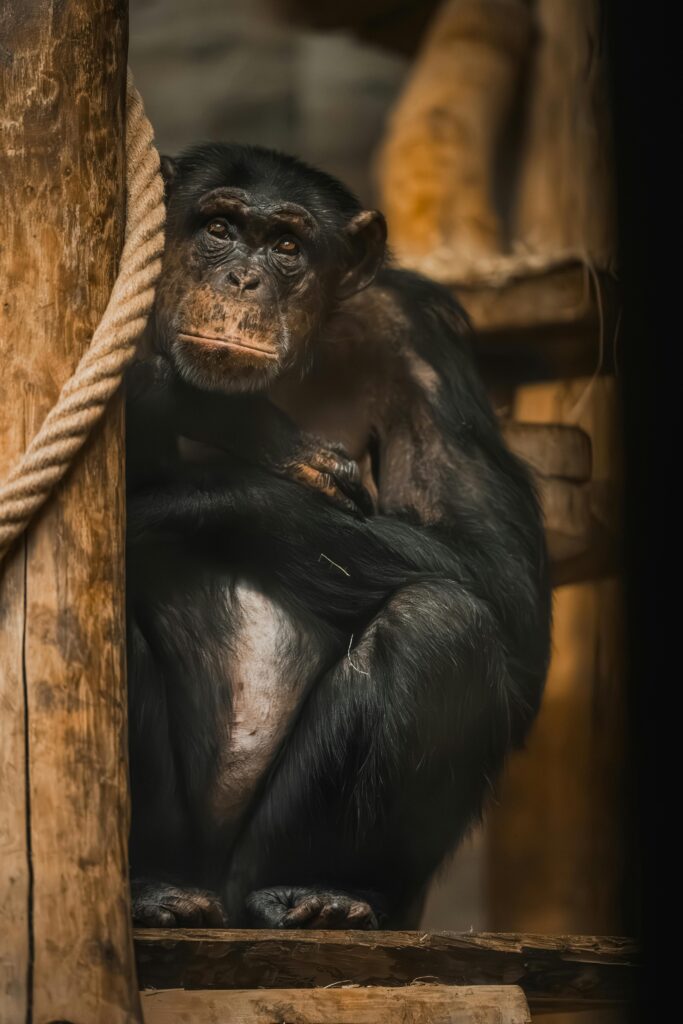
Only in recent decades has the topic become the focus of research.
Behavioral studies, for example in chimpanzees, dolphins and elephants, now clearly show that grief is also deeply rooted in the animal kingdom.
An impressive example is provided by the chimpanzee Noel at the Chimfunshi Wildlife Orphanage in Zambia.
After her adopted son Thomas passed away, she stayed by his side and nursed his body with a blade of grass – an expression of lasting attachment and compassion, scientists report.
Also in elephants ritual behaviors are documented.
African and Asian elephants often show great unrest at the death of a herd member:
They guard the body, explore it, nudge it or even carry it for long distances.
These reactions suggest an emotional understanding of loss.
One study even used YouTube videos to capture rarely documented behavior of Asian elephants – a creative approach that highlights the emotional depth of these animals.
Dogs also grieve.
An Italian study showed that many dogs exhibit significant behavioral changes after losing an animal companion:
They sought more closeness, ate less or hardly played for months.

Famous examples such as the Skye Terrier Greyfriars Bobby or the Japanese Akita Hachikō still touch us today: Both dogs remained faithful to their deceased owners for years – a sign of a love that reaches beyond death.
Animals show us that grief is not a purely human concept.
They live their losses openly: by closeness, by retreat, by rituals.
Without social expectations. Without having to justify themselves.
Perhaps we too should learn to accept our grief – as a natural part of bonding and love.
Managing grief does not mean to get rid of them, but to give their space.
It is a silent testimony that we could love.

